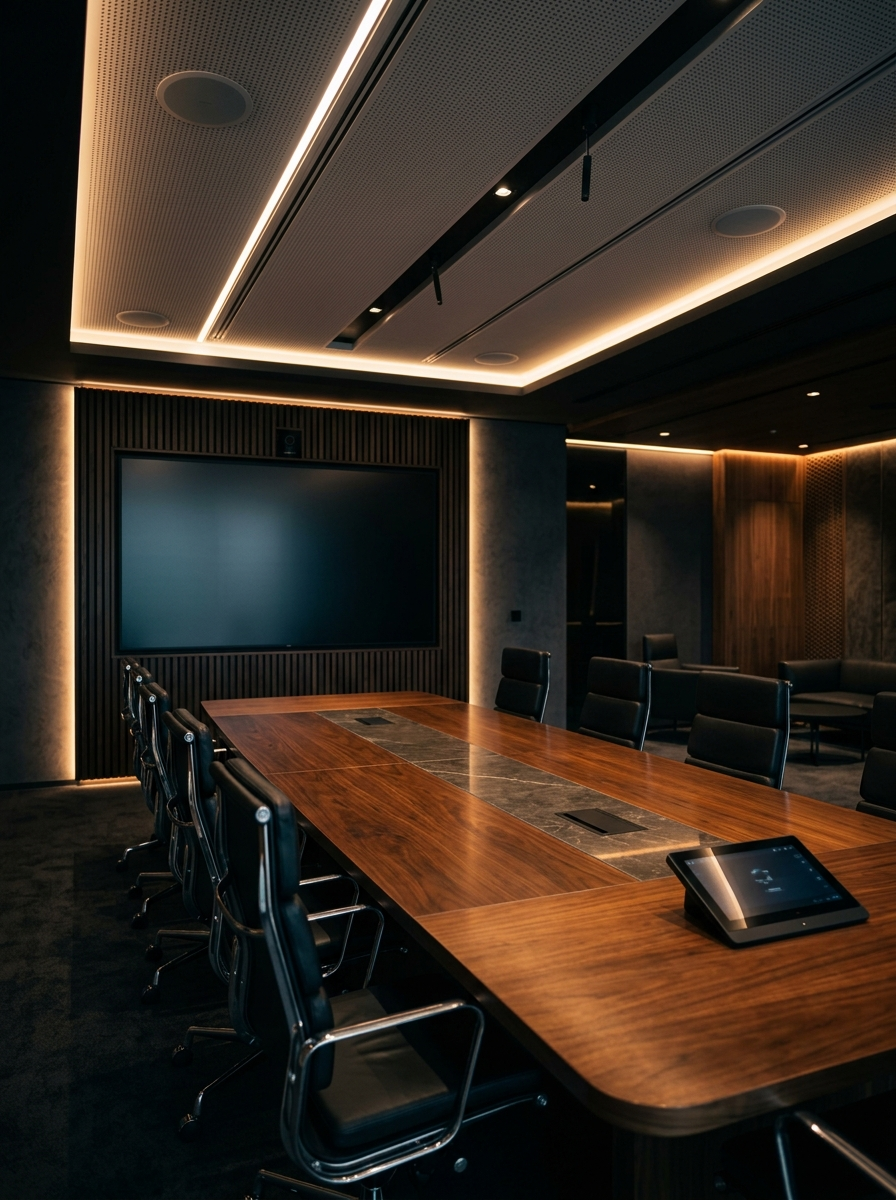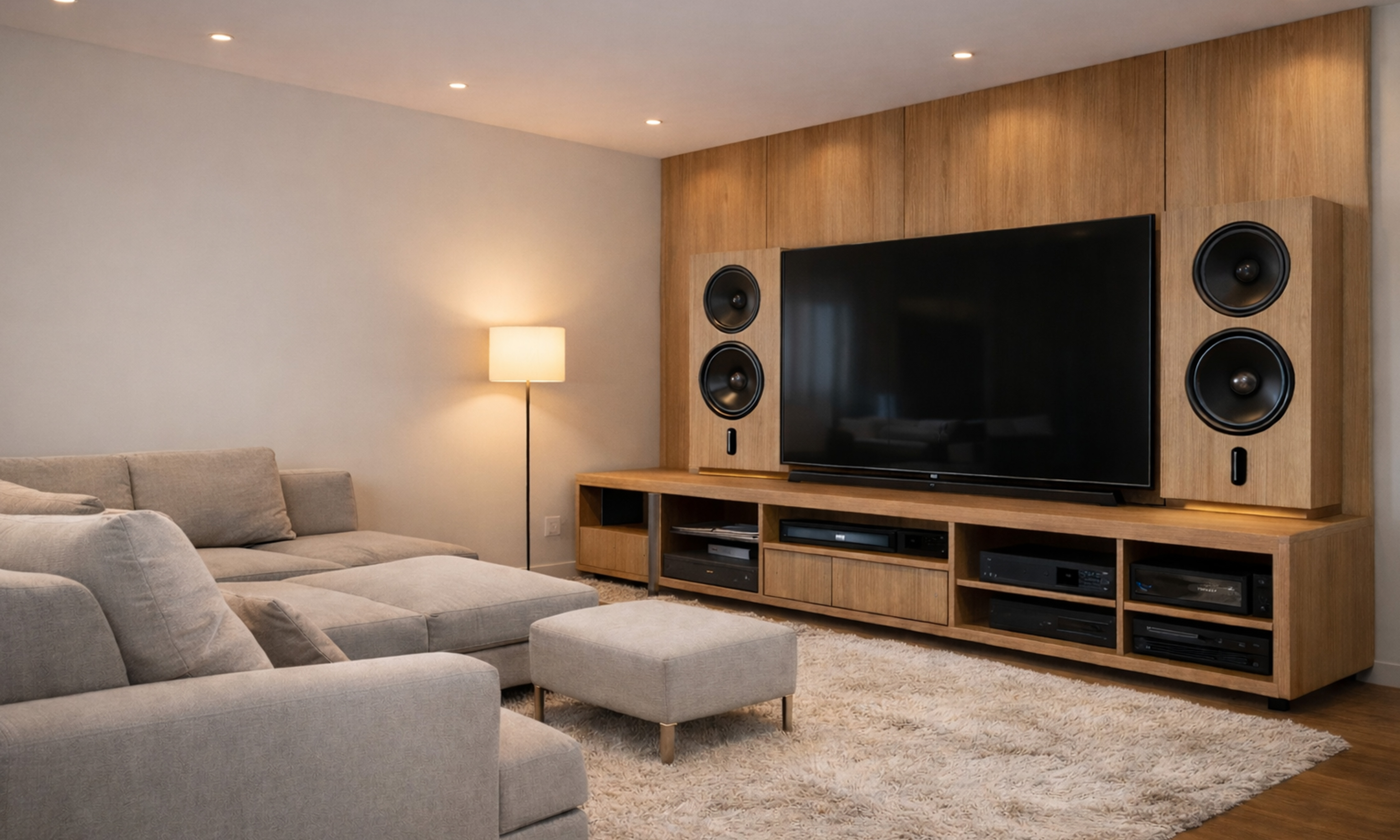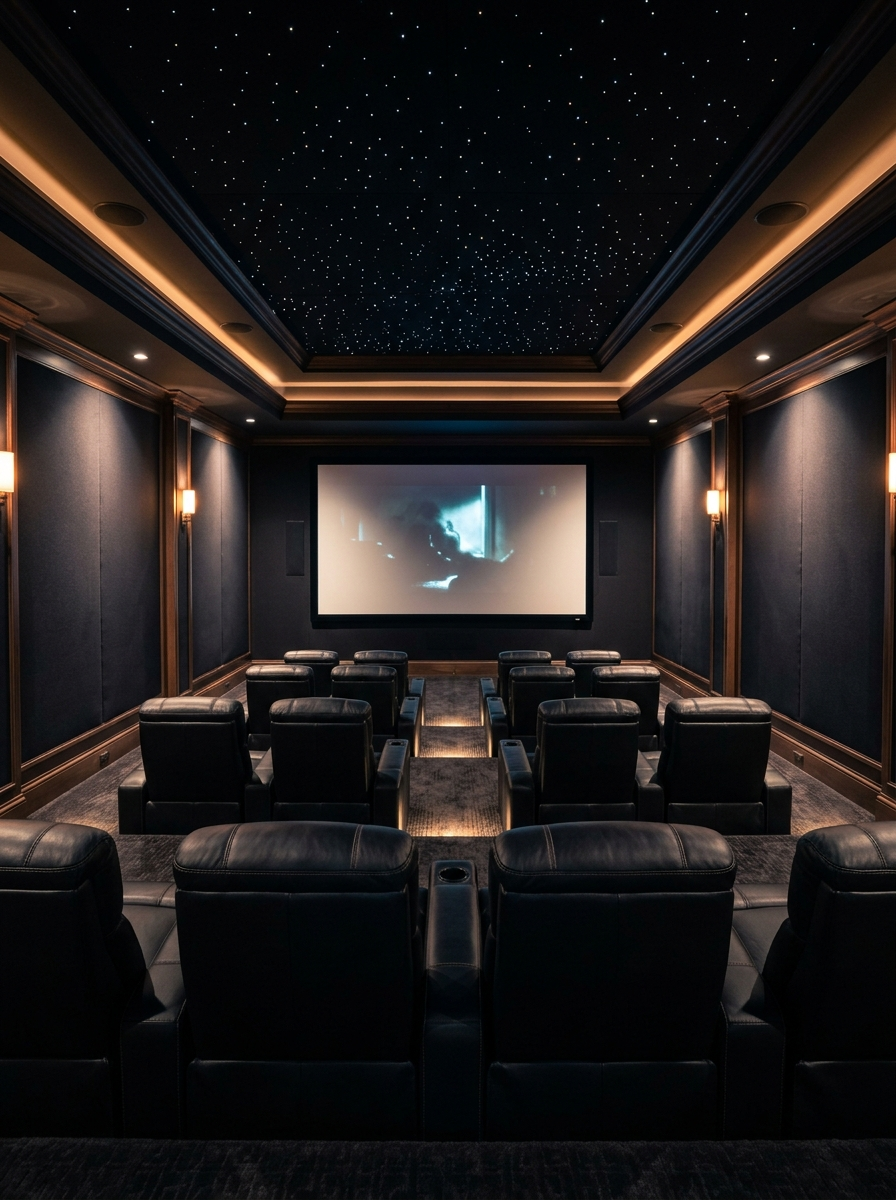
Most home theatre projects start with a shopping list. The better ones start with a room. Before a single speaker is specified, we are measuring reverberation time, mapping sightlines from the back row and working out where the low-frequency nulls will land.
The room is the first component
Every surface in a cinema is doing something to the sound, whether you planned it or not. Parallel walls create flutter echoes. A bare ceiling smears dialogue. A glass rear wall turns a carefully set up centre channel into a haze.
Treatment is not about covering walls in foam. It is about placing absorption, diffusion and bass trapping where the measurements say they are needed — and leaving the rest of the room alone so the space still sounds alive.
Sightlines before seating
- Screen height is set from the eye level of the second row, not the first.
- Riser height follows from head clearance, typically 300–450 mm per row.
- Viewing distance targets a 36–40 degree horizontal field of view for a reference experience.
Calibration is where it becomes a cinema
Identical equipment in two rooms will measure — and sound — completely differently. Time alignment, level matching, bass management and room correction are what turn a collection of boxes into a coherent sound field.
A properly calibrated system does not draw attention to itself. You stop hearing speakers and start hearing the film.
That final step is also the one most often skipped. It is the cheapest part of the budget and the one that decides whether the rest of it was worth spending.